
REFLEXOLOGY
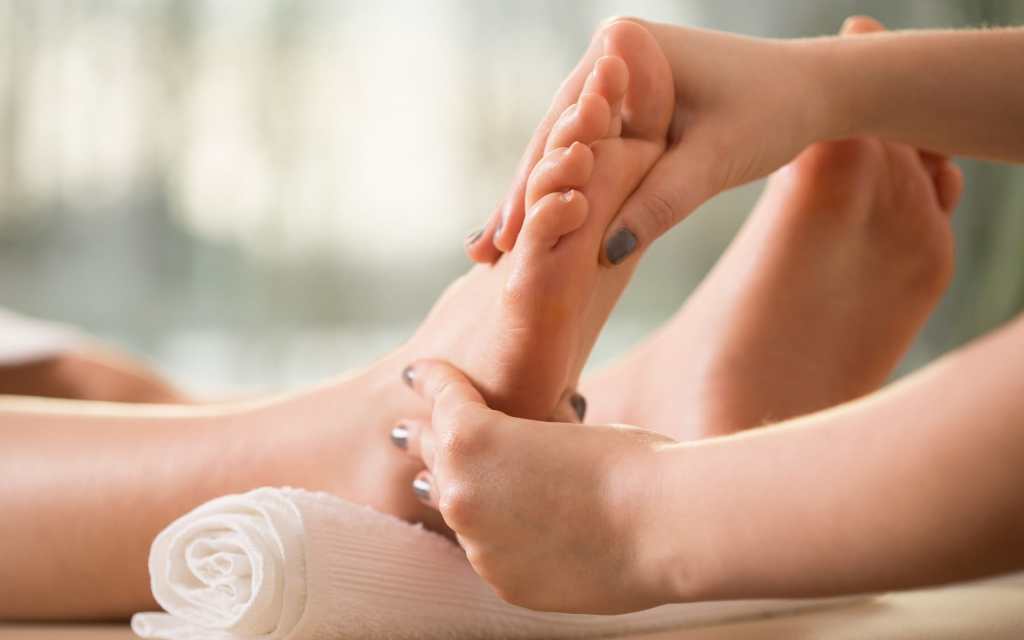
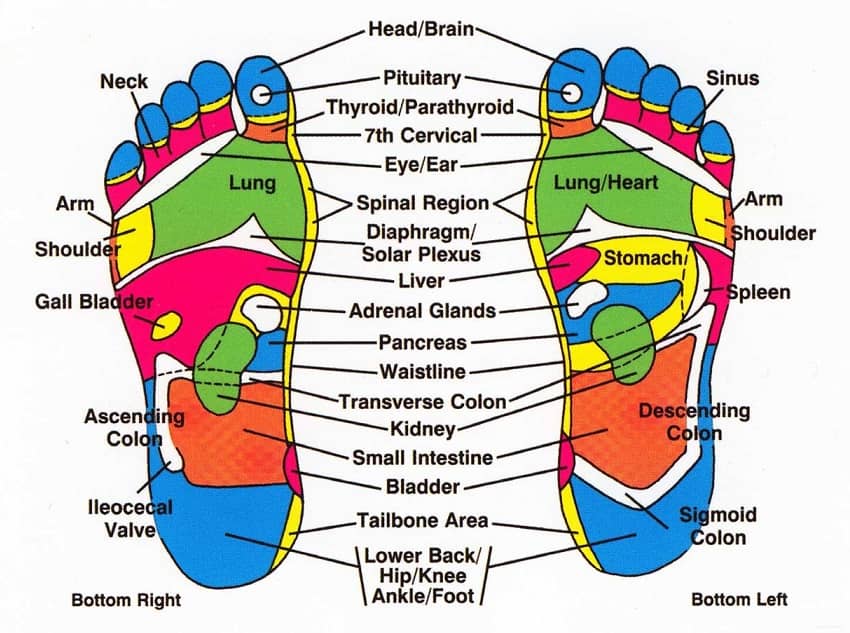
Reflexology, also called Zone Therapy, is based on the notion that each body part is represented on the feet, hands, face and ears, and that pressing on specific points on these body parts can have therapeutic effects in other parts of the body. For example, in Reflexology there is a specific spot in the arch of the foot corresponds to the bladder. When a therapist applies appropriate pressure to this spot using their thumbs, fingers or sometimes a wooden stick, it is said to affect bladder functioning.
Reflexology was first introduced in the US in the early 1900s by William H. Fitzgerald, M.D., an ear, nose, and throat specialist. It was then modified by Eunice D. Ingham, a nurse and physiotherapist, who mapped the entire body into “reflexes” on the feet. Reflexologists use this reflexology chart or foot map to guide their work. The left foot corresponds to the organs found on the left side of the body and the right foot to the organs on the right side.
Although the foot reflexology is still mainstream, hand reflexology and face reflexology are also gaining popularity.

Learn more about Reflexology from:
Learn more about other massages.
▋Classification by Regional Characteristics
- Swedish Massage
- Thai Massage
- Tui Na (China)
- Shiatsu (Japan)
- Indian Head Massage
- Ayurvedic Massage (India)
- Lomi Lomi Massage (Hawaii)
- Venik Massage (Russia)
- Turkish Bath Massage
▋Classification by Theory
▋Classification by Equipment Used
▋Classification by Techniques Used
▋Classification by Environment
© 2023 MYOTIVATE
 MYOTIVATE