
SPORTS MASSAGE
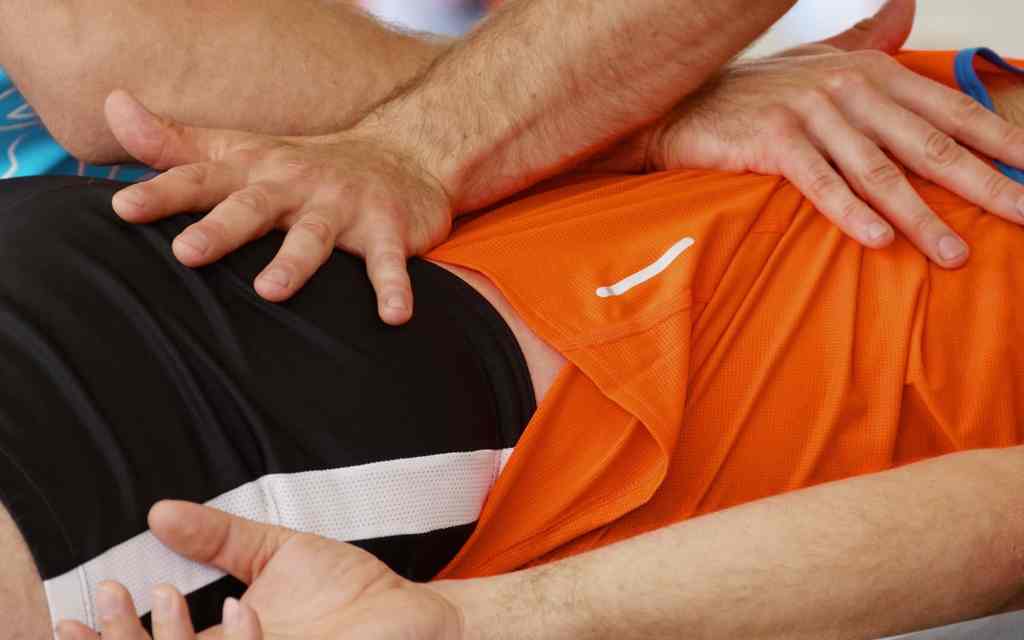
Sports Massage refers to massage tailored to people who engage in sports or athletic activities. Sports Massage can be divided into two types – Event Massage and In-training Massage, depending on the timing when the massage is applied. The former is performed on the day of an event – a competition or a match, while the latter on usual training days.
Event Massage
1. Pre-Event Massage
- Timing: 15-45 minutes before a competition or match*1&2
- Duration: 15-20 minutes
- Goals: Last preparation for an upcoming event with immediate effects. Increase blood supply to the tissues (skin, fascia, muscles). Improve joint mobility. Adjust mental and emotional readiness*3.
- Characteristics: Upbeat. Brisk. Light. Never deep. Concentration in major muscle groups used in the upcoming performance.
- Techniques used: Swedish Massage (effleurage, petrissage, tapotement). Stretching.
- Performed by: Sports Massage Therapist (Level 3 or above qualification)
*1 Whilst some articles or therapists say that a Pre-event Massage can take place up to 48 hours before an event, the massage applied on days before the event should be counted as an In-training Massage just for conditioning. The effects of massage performed on days before, such as improved blood circulation or mental adjustment, don’t last until the event.
*2 Warm up should always be done after the Pre-event Massage, not before the massage, as the increased heart rate and respiratory rate generated by warm up could drop during the massage.
*3 Generally massage induces relaxation, so massage could get in the way of an athlete’s concentrating on the event. That’s why upbeat and brisk massage is usually applied just before the event. On the other hand, if an athlete suffers huge pressure and finds difficulty in concentration, gentler and calming massage could be beneficial.
2. Mid-Event Massage
- Timing: During a competition or match
- Duration: 5-10 minutes
- Goals: Help quick recovery and preparation for the rest of the event. Increase blood supply to the tissues (skin, fascia, muscles). Relieve muscle tightness. Improve joint mobility. Adjust mental and emotional state.
- Characteristics: Upbeat. Light. Concentrate in major muscle groups heavily used in the event.
- Techniques used: Swedish Massage (effleurage, petrissage). Compression. Stretching.
- Practiced by: Sports Massage Therapist (Level 3 or above qualification)
3. Post-Event Massage
- Timing: Ideally within four hours after a competition or match. By the end of the day at the latest*4.
- Duration: 15-20 minutes
- Goals: Help a quicker recovery after the event. Increase blood supply to the tissues (skin, fascia, muscles). Relieve muscle tightness and joint stiffness. Reduce post-exercise soreness appearing on the following days (called Delayed Onset Muscle Soreness (DOMS)). Adjust mental and emotional state.
- Characteristics: Slow. Relatively light. Concentrate in major muscle groups used in the event.
- Techniques used: Swedish Massage (compressive effleurage, petrissage). Compression. Stretching.
- Practiced by: Sports Massage Therapist (Level 3 or above qualification)
No Deep Tissue Massage techniques should be used for the Post-event Massage. After a serious competition or match, your tissues are exhausted and fragile, so deeper pressure could damage the tissues further and delay the recovery. You may witness some therapists apply Deep Tissue Massage techniques to athletes right after an event, but they are usually volunteer therapists working for a charity event without proper training or knowledge of Sports Massage.
After a competition or match, there are some options you can take to reduce the possible post-exercise soreness and quicken your recovery:
- Warm down: Light cardio exercise keeps your improved blood flow and thus helps release metabolic wastes and bring in nutrients further.
- Post-event Massage
- Warm bath: Improve your blood flow.
- Stretching: Improve your blood flow*5. Relieve muscle tightness and joint stiffness.
Enjoying pints of beer at the pub after the event, taking shower, having nutrition-rich dinner and going straight to the bed sounds nice and rewarding, but it guarantees a week of agony, suffering from the muscle soreness!
*4 Whilst some articles or therapists argue that a Post-event Massage can take place up to 2 to 3 days after an event, the massage given on the following days is not as ideal as those applied on the day, because your muscles will have already started suffering from post-exercise soreness on the next day and you may feel the pressure of the massage uncomfortable.
*5 Some research shows that holding a static stretch for more than five seconds can decrease the local blood flow to the muscle temporarily. The stretching, however, can achieve better blood flow in the longer term by relieving tightness in the muscles and fascia and thus freeing up the vessels.
In-Training Massage
1. Maintenance / Conditioning / Injury Prevention / Performance Improvement
- Timing: Anytime other than an event day
- Duration: 30-90 minutes
- Goals: Maintain tissue conditions through daily training routines. Recover tissue conditions after increased training volume or intensity. Help reduce the risk of injury. Achieve ideal tissue conditions for a specific sport.
- Characteristics: Dynamic. Technical. Tailor-made to the sports.
- Techniques used: Swedish Massage (effleurage, petrissage, friction). Deep Tissue Massage*6. Stretching. Other advanced techniques.
- Practiced by: Advanced Sports Massage therapist (Level 4 or above qualification)
This massage requires from therapists the knowledge on which muscles are heavily used in each sport. For example, sports involving swings such as tennis and golf heavily involve hip rotations, while cycling doesn’t involve much hip rotations but heavily uses quadriceps (esp. vastus lateralis) instead. And likewise, to improve performance, therapists must possess knowledge of the ideal length of each muscle required in the sport. For example, sports involving kicking such as football, karate and dancing require more flexibility in hip flexion, or precisely more stretchability in your hamstrings so that you can raise your legs well over 90 degrees up to 160 degrees with your legs straight. Advanced Sports Massage therapists can not only check the tightness of muscles but also assess the length or stretchability of each muscle. They can also apply different ligamentous tests to see if pain in a joint is caused by the joint structure itself (ligament, cartridge, etc) or by the muscles attached to or around the joint.
Advanced Sports Massage therapists with Level 4 or above qualification possess a deeper understanding of anatomy, assessment and physical movements in sports, and can apply various advanced massage techniques to achieve the goals of each athlete in different sports.
*6 No Deep Tissue Massage techniques should be applied for 3-4 days before a competition or match since the soreness caused by the pressure could impair the performance in the coming event. Likewise, Deep Tissue Massage techniques should be avoided for 3-4 days after an event since the pressure could damage the tissues further and delay recovery.
2. Injury Recovery / Rehabilitation
- Timing: After an injury or surgery
- Duration: 30-60 minutes
- Goals: Aid injury recovery and recovery time. Reduce scarring. Regain muscle strength and length.
- Characteristics: Technical. Tailor-made to the injury. Follow a recovery plan.
- Techniques used: Swedish Massage (effleurage, petrissage, friction). Deep Tissue Massage. Stretching. Other advanced techniques.
- Practiced by: Advanced Sports Massage therapist (Level 4 or above qualification)
Massage improves blood circulation and relaxes muscles, and thus helps to deliver more oxygen and nutrients to the injured tissue, which accelerates the recovery rate.
When there is still inflammation or swelling, no massage should be applied directly to the injured area. To help reduce the swelling, Lymphatic Drainage Massage can be applied to the body parts closer to the heart from the injury.
Even after the inflammation and swelling are gone, the healing process is still undergoing and the damaged tissue is still fragile. Gentle massage can be applied to the injured area to improve the circulation, but deep pressure should still be avoided. The duration depends on the severity of the injury.
Scarring appears after an injury as a natural healing process of damaged tissues. The body produces collagen fibres to seal off any gap in the tissues caused by the injury. Collagen is tough in texture and lays across the direction of muscle fibres, which impinges the gliding of muscle fibres. Massage can be applied to break down and realign collagen fibres, although the pressure needs to be adjusted depending on the maturity of the scar.

Learn more about other massages.
▋Classification by Regional Characteristics
- Swedish Massage
- Thai Massage
- Tui Na (China)
- Shiatsu (Japan)
- Indian Head Massage
- Ayurvedic Massage (India)
- Lomi Lomi Massage (Hawaii)
- Venik Massage (Russia)
- Turkish Bath Massage
▋Classification by Theory
▋Classification by Equipment Used
▋Classification by Techniques Used
▋Classification by Environment
© 2023 MYOTIVATE
 MYOTIVATE